Exploring the rainforest in Suriname 🇸🇷
Getting to our last stop in Suriname was a bit of a more interesting journey… A shuttle dropped us off in Atjoni – the local “harbour”. A place where everything from tourists to food and mattresses was loaded onto boats. The instructions were “someone is going to pick you up”. When? How? Where? To us Europeans, who run on timetables and way signs, this was a bit more free-flowing experience. But we waited and indeed, amidst the buzzing organised chaos, we were picked up. Abini – our guide for the next few days – brought us to the right boat and we made the journey upstream on the Upper Suriname River.
Once docked in Gunsi, we moved into our little cabin for the next few days. The Tei-Wei resort is just next to the Gunsi village, one of the many maroon villages. Those communities of escaped enslaved Africans from the Dutch colonial times built their own self-sustained villages. Next to the Suriname River, everyday life heavily revolves around that too. It’s a place to wash, for children to bathe, for transportation, for hunting, and more.
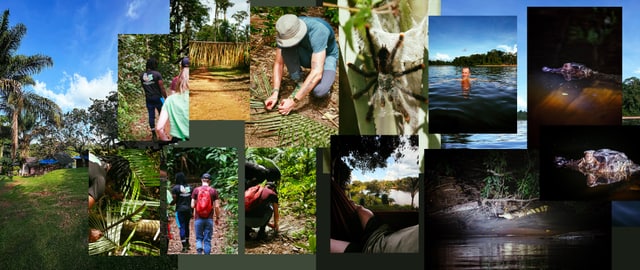
After our busy schedule exploring Suriname, this was a great place to relax and enjoy the quiet life. With our guide Abini, we explored the adjoining rainforest, with its rich supply of plants (and way too big and way too hairy spiders 😱). We also learned about their local cultures, the differences in communities (traditional or church-based), their food, and the wildlife around it.
The boat tour at night showed us the caimans that were native to the same river we swam in during the day. A fact you should only mention to the family at home after returning. 😉
Time flew by as our last days in the country came to an end and we had to travel back to the airport. ✈️